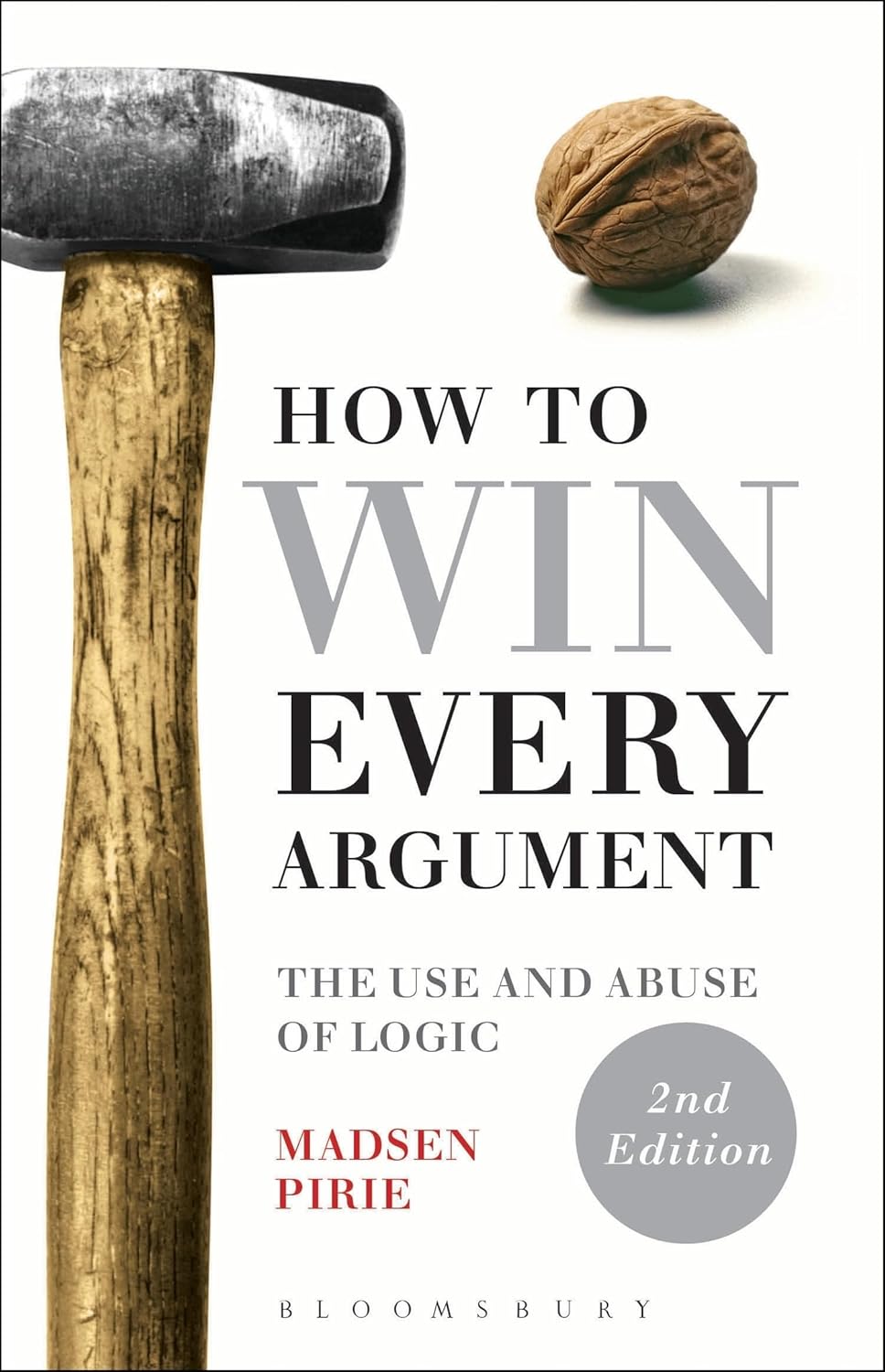
The one on the cover is not a decoration: it's a moral choice. A blacksmith's hammer, a walnut. Which one do you want to be when you walk into a meeting, a negotiation, a public hearing?
Madsen Pirie did not write a logic manual. He wrote a manual of rhetorical survival — disguised as an academic catalogue of fallacies. Over seventy techniques, from ad hominem to affirming the consequent, explained twice: how to recognize them when they're used against you, and how to use them yourself when you need to. It's this second part that makes the book uncomfortable. And precisely for that reason, useful.
I recommend it to those who, in their profession — executives, consultants, managers, communicators — spend their days at tables where words carry more weight than numbers. Board meetings, public tenders, critical stakeholders, institutional negotiations: those who know the rules of the rhetorical game win. Those who don't get played.
This is not a book that teaches you to be a better person. It is a book that teaches you not to be gullible. The difference is right there — and it makes a difference in your career.
Sharp, irreverent, at times cynical reading. Exactly as one should be if they want to understand how people truly work, before trying to convince them.