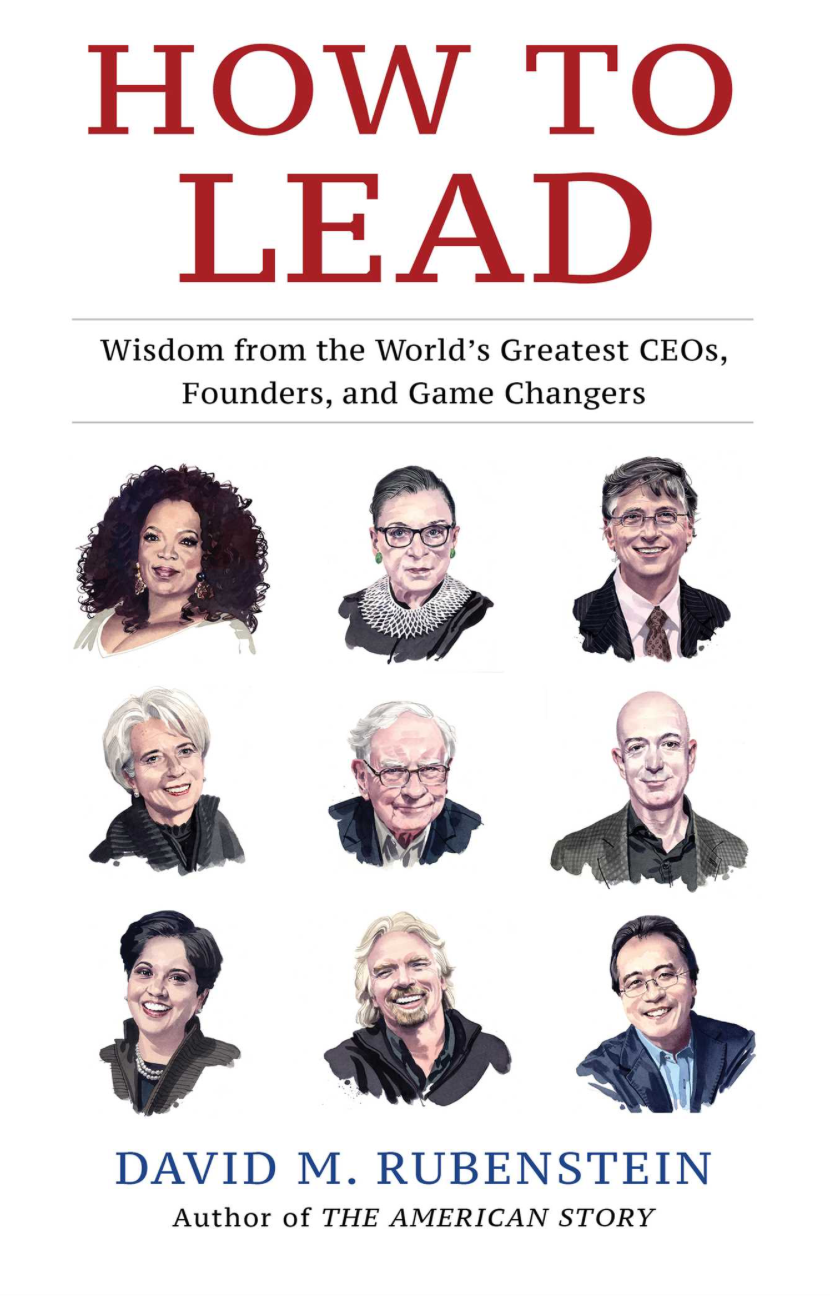
Here is one thing that makes this book different from all the other leadership manuals crowding airport shelves: Rubenstein is not a Harvard academic, not a McKinsey consultant, not even a journalist. He is the co-founder of Carlyle Group, one of the largest private equity firms in the world, with over 300 billion dollars under management and a personal fortune estimated at three and a half billion. When he sits across from Jeff Bezos or Warren Buffett, he does not interview them. He questions them as an equal.
That is the surgical difference few people notice. Rubenstein inherited Charlie Rose's interview table after the harassment scandal, but the format changed nature. From a journalistic show it became a peer-to-peer dialogue, with dynamics no other interviewer in the world can replicate. And the guests open up differently: they say things they would never tell a journalist.
The book collects thirty of these conversations — fifteen men, fifteen women, from finance to tech, from entertainment to sport, from justice to politics. Buffett, Bezos, Gates, Lagarde, Oprah, Ruth Bader Ginsburg, Tim Cook, Coach K, Yo-Yo Ma. But the most valuable lesson is not in the answers — it is in the contrast. Because thirty top-tier leaders describe thirty radically different paths. There is no ONE formula for leadership. There are at least thirty, and each of us has to find our own.
I recommend it to managers, C-levels, entrepreneurs and board members who are tired of little manuals on "the seven secrets of effective leaders" and are looking instead for raw, unfiltered testimony from people who have truly built something enormous. Best read in small doses — one interview a week, like pills of awareness.
It is not a book that teaches you how to lead. It is a book that forces you to ask yourself how and why you are doing it.